
Deadly Tornado Outbreak Hits Illinois
A deadly tornado outbreak struck Illinois and the Plains on Sunday, leaving destruction across multiple communities and reinforcing the need for a tornado shelter at facilities that cannot afford long warning lead times. The severe weather brought damaging tornadoes, large hail, and fierce winds. It also caused fatalities and leveled multiple homes.
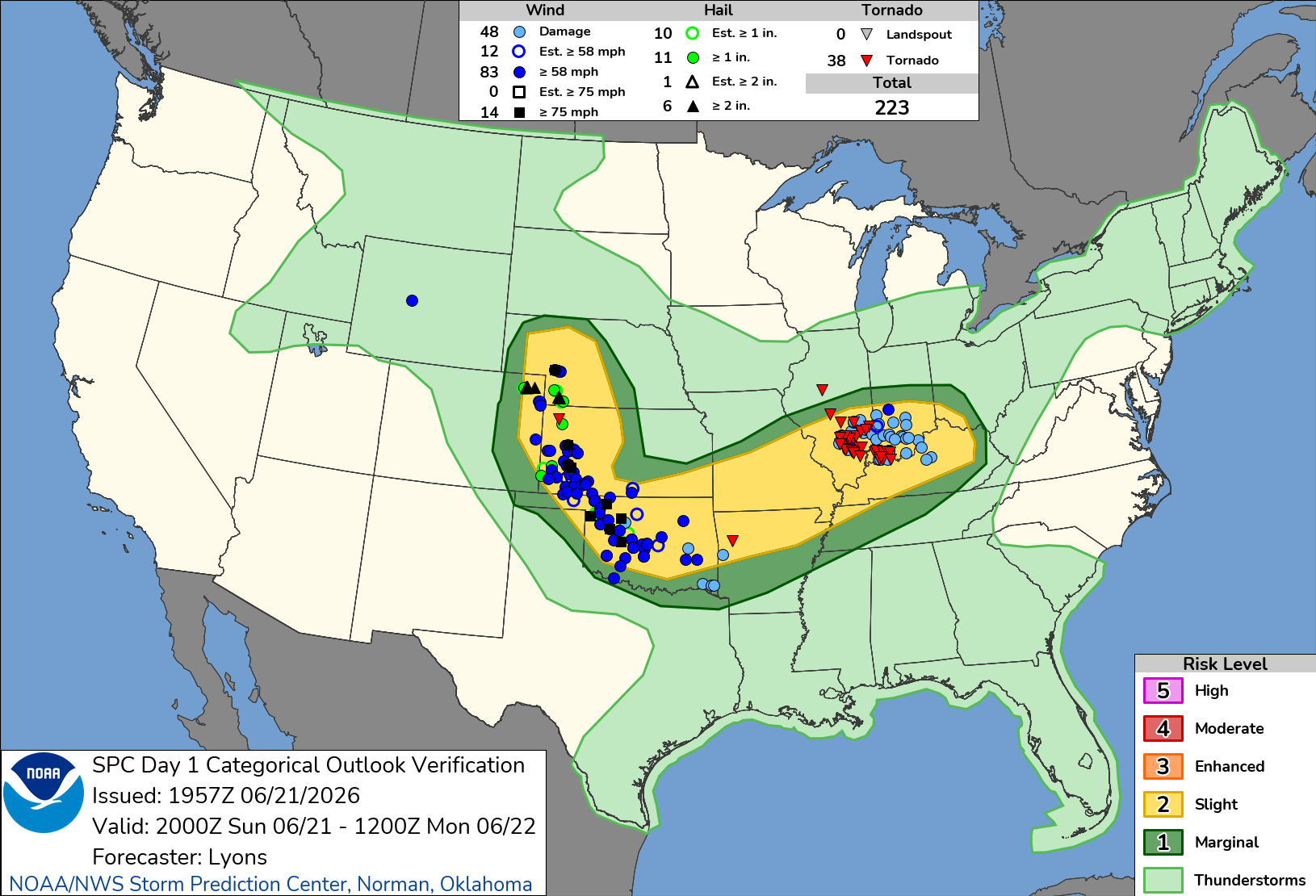
Source: NOAA Storm Prediction Center
The event unfolded during an active severe weather pattern that extended across the region. Fox Weather reported the dual threat of tornadoes, wind, hail, and flash flooding across the Plains, a setup that often strains local response systems and pushes warning networks to their limits. For plant managers and site leaders in Illinois, that means the threat was not isolated to one corridor. It moved with the broader storm line and affected more than one county.
Illinois is no stranger to spring tornado risk. The state sits in a corridor where warm, moist air from the south can meet stronger upper-level winds and a sharp boundary. That combination can produce fast-developing supercells and tornado outbreaks. In a state with dense industrial corridors, rail yards, schools, and municipal buildings, the operational impact can spread quickly. Power loss, roof damage, broken glazing, and debris fields can halt production and complicate emergency access.
Illinois Tornado Damage Raises Facility Risk
The most serious concern in this outbreak is the speed of the damage. Homes were completely leveled in some areas. That tells facility leaders in Illinois, Missouri, and nearby states that this was not a routine thunderstorm event. It was a destructive tornado environment capable of producing violent impacts in a short window.
For an operations director, the immediate issue is not only the storm itself. It is the interruption that follows. Roads can close. Utility service can fail. Emergency crews may need time to reach damaged sites. In that setting, a tornado shelter becomes part of continuity planning, not just life safety planning. The goal is to keep people protected while the storm passes and responders assess the area.
The Storm Prediction Center routinely flags these multi-hazard setups when the atmosphere supports tornadoes, damaging wind, and hail at the same time. That type of outlook matters in Illinois because a single warning can cover a wide footprint. A plant in central Illinois may have only minutes to move staff. A school district in southern Illinois may face the same pressure. A commercial tornado shelter gives those facilities a fixed place to move people fast.
Sunday’s outbreak also fits a pattern that often produces severe disruption in the Midwest and lower Mississippi Valley. Tornadoes in these events can form quickly, then move on before damage surveys begin. That leaves managers with a narrow window to account for staff, secure equipment, and protect critical records. For facilities in Springfield, Peoria, Champaign, and the broader Chicago-area logistics network, the risk is not theoretical. It is tied to how these storms develop and how little time warnings can provide.
Why Warning Lead Time Matters
Tornado warnings are issued by the National Weather Service when radar, spotter reports, or other evidence show a tornado is likely or already occurring. In outbreaks like this one, warnings can stack across multiple counties. That creates pressure on dispatch teams, shift supervisors, and security staff. It also makes it harder to move everyone to a safe interior room if the building is large or spread across multiple floors.
Illinois facilities that rely on open production space face a harder problem. Manufacturing floors, warehouses, and maintenance shops often have long travel distances to reach shelter. If a warning arrives as a storm is already producing damaging winds, every extra second matters. A tornado shelter near the work area reduces that travel time and helps keep the response orderly.
This outbreak also highlights the difference between general severe weather planning and tornado-specific planning. Hail and wind can damage roofs and equipment. Tornadoes can remove walls, collapse structures, and scatter debris across loading docks and access roads. In a violent outbreak, the strongest part of the storm may pass in minutes, but the consequences can last for days.
Illinois employers that operate across multiple sites should also review their service areas and compare them with local warning coverage. A site in central Illinois may face a different travel time, staffing pattern, or shelter need than one near the St. Louis metro or farther north. The event on Sunday shows why a one-size plan can fail when the storm mode turns severe.
Planning for Industrial Sites After This Outbreak
Industrial and manufacturing facilities should treat this outbreak as a live example of what can happen when tornadoes track through populated work zones. The damage pattern described in Illinois suggests a storm capable of producing catastrophic local losses. That should prompt a review of headcount, shift timing, and shelter access at each site.
Facility managers can use our Storm Planner to evaluate shelter placement before the next severe weather outbreak. The tool helps teams think through occupancy, access routes, and the distance workers must cover during a warning. It is especially useful for plants with multiple buildings, outdoor staging areas, or mixed office and production space.
For some operations, the right answer is a permanent solution. For others, a rental may bridge a near-term gap while capital plans move forward. Our commercial tornado shelters are designed for facilities that need a durable protection strategy tied to real occupancy demands. In a state like Illinois, where spring outbreaks can escalate quickly, that planning step is part of operational resilience.
The Sunday outbreak should also prompt a review of warning procedures. Sirens, text alerts, radio traffic, and internal notification systems should all be tested against a fast-moving tornado scenario. If a storm can level homes, it can also overwhelm a facility that depends on a single response path. The best plans assume the first warning may be the only warning.
Plan Your Shelter Capacity
Industrial and manufacturing leaders in Illinois should use this outbreak to reassess how many people must reach protection at once. If your site has shift overlap, contractor traffic, or outdoor crews, your shelter capacity needs to reflect the busiest hour, not the average one. You can explore rental options for short-term needs, photo gallery examples for layout planning, and use the Storm Planner to map a response that fits your floor plan. If you are ready to move forward, contact our team to discuss capacity, placement, and timing, or view available shelter inventory to compare options for your facility.
The Illinois outbreak is a reminder that severe weather planning is not limited to the forecast office. It reaches the loading dock, the production line, the maintenance yard, and the parking lot. When tornadoes strike with this level of force, the facilities that recover fastest are usually the ones that already planned where people would go.