FEMA P-361 design positioning
ICC-500 compliant
EF-5 / 250 MPH engineered
Manufactured in Wilkesboro, NC
Statewide Tennessee delivery
Permanent or rental

Commercial Tornado Shelter, Severe Weather Protection, Cool-down and Warm-up Facilities, and life safety shelter by:
US Tornado Shelter™
Industrial infrastructure and commercial developments across Tennessee face severe life-safety threats from fast-moving nocturnal tornadoes along Dixie Alley requiring certified Tornado Shelters in Tennessee. Driven by rapid expansion in manufacturing hubs like Memphis, Nashville, and the mega-site projects at BlueOval City, demand for certified extreme-wind protection continues to rise. US Tornado Shelter provides turn-key commercial storm shelters for manufacturing facilities and educational campuses, as well as rapid-deployment mobile tornado shelter rentals for temporary job sites from West Tennessee to the Smoky Mountains. Explore our full storm shelter service areas to verify state coverage and FEMA P-361 / ICC 500 engineering standards.
FEMA P-361 design positioning
ICC-500 compliant
EF-5 / 250 MPH engineered
Manufactured in Wilkesboro, NC
Statewide Tennessee delivery
Permanent or rental
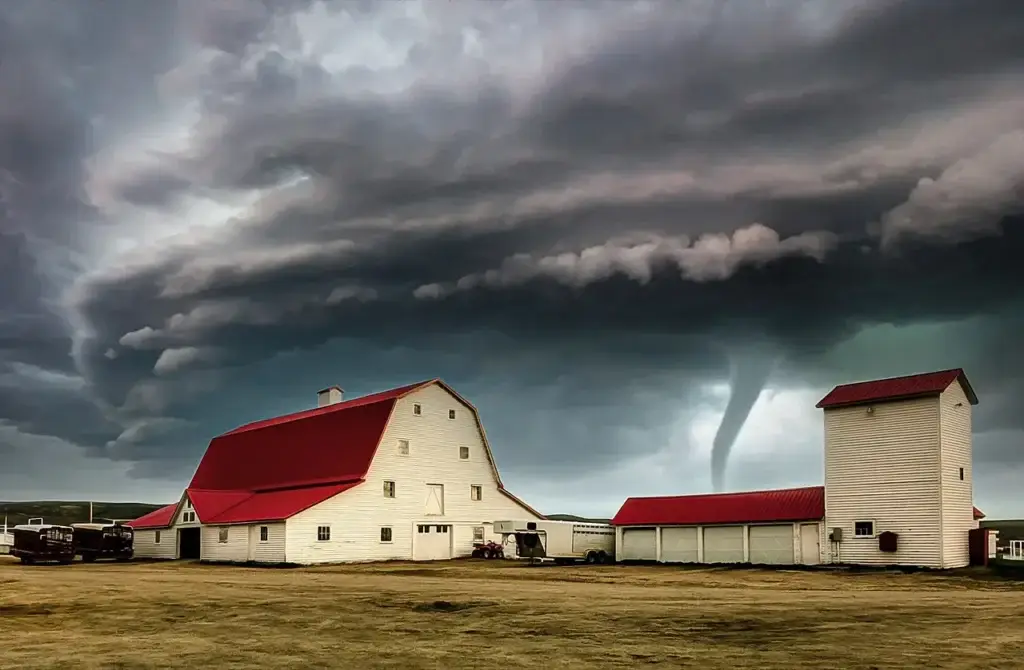
When an EF-3 is two minutes out, ‘shelter in place’ isn’t a real answer.
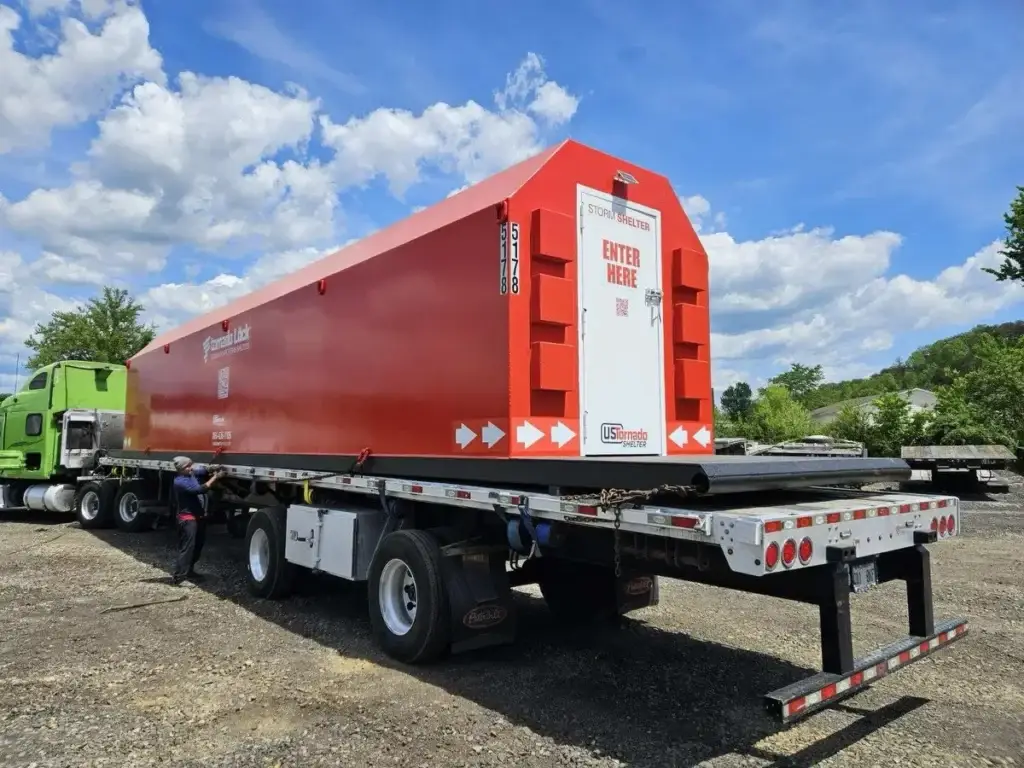
US Tornado Shelter delivers engineered protection, designed to FEMA P-361 / ICC-500 criteria, rated for EF-5 / 250 MPH winds, and deployable in weeks, not years.
US Tornado Shelter provides commercial and community storm shelter solutions across every region of Tennessee — West, Middle, and East. Permanent installs and rapid-deploy rentals are both available.
Middle Tennessee is the highest-growth metro corridor in the South and one of the country’s most concentrated nighttime tornado zones. GM Spring Hill (and its $2B+ EV battery / EV vehicle investments), Nissan Smyrna, Asurion, HCA, the music industry, and a massive healthcare and distribution footprint all sit here. Service areas include Nashville, Murfreesboro, Franklin, Brentwood, Hendersonville, Mt. Juliet, Lebanon, Gallatin, Smyrna, La Vergne, Spring Hill, Columbia, Cookeville, Clarksville, Dickson, and Davidson, Williamson, Rutherford, Wilson, Sumner, Maury, Robertson, Cheatham, Dickson, Montgomery, Putnam, and surrounding counties.
Memphis is a global logistics hub (FedEx WorldHub, the Port of Memphis, distribution / freight). Ford’s BlueOval City megasite at Stanton (Haywood County) is a $5.6B EV truck and battery campus on the largest greenfield manufacturing site in Tennessee history. West Tennessee tornado risk includes both Dixie Alley and Mid-South events. Service areas include Memphis, Germantown, Collierville, Bartlett, Cordova, Millington, Covington, Brownsville, Jackson, Stanton, Dyersburg, Union City, Martin, and Shelby, Tipton, Fayette, Haywood, Madison, Dyer, Lauderdale, Crockett, Gibson, Obion, and Weakley counties.
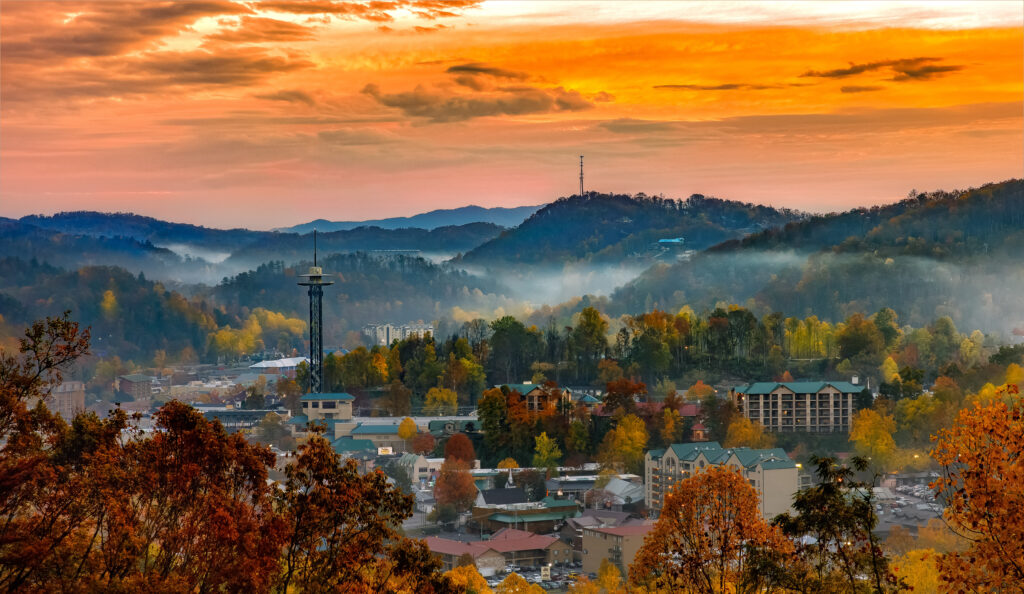
Knoxville, Oak Ridge National Laboratory (ORNL), the Y-12 National Security Complex, the University of Tennessee, and a manufacturing / energy / research corridor along I-40 and I-75. Tornado risk extends through the Tennessee Valley and into the foothills. Service areas include Knoxville, Maryville, Alcoa, Oak Ridge, Lenoir City, Sevierville, Pigeon Forge, Gatlinburg, Morristown, Newport, Crossville, and Knox, Blount, Anderson, Loudon, Sevier, Roane, Cocke, Jefferson, Hamblen, Cumberland, and Monroe counties.
Chattanooga, VW Chattanooga assembly, the Tennessee River corridor, Lookout Mountain logistics, and a fast-growing tech / advanced-manufacturing base. Service areas include Chattanooga, East Ridge, Red Bank, Cleveland, Athens, Dayton, McMinnville, and Hamilton, Bradley, McMinn, Rhea, Marion, Sequatchie, Polk, and Meigs counties.
Johnson City, Kingsport, Bristol, Eastman Chemical, and the Tri-Cities aerospace / chemical corridor. Service areas include Johnson City, Kingsport, Bristol, Greeneville, Elizabethton, Erwin, and Washington, Sullivan, Hawkins, Greene, Carter, Unicoi, and Hancock counties.
Cookeville, Crossville, Sparta, Livingston, McMinnville, and the rural manufacturing / agriculture base. Cookeville-Putnam County was the deadliest part of the 2020 EF-4. Service areas include Cookeville, Crossville, Sparta, Livingston, McMinnville, Smithville, Carthage, and Putnam, Cumberland, White, Overton, Warren, DeKalb, Smith, Jackson, and Macon counties.
Tullahoma, Manchester, Shelbyville, Columbia, Lawrenceburg, Pulaski, Lewisburg, and a corridor of auto suppliers, Arnold AFB, Jack Daniel’s distillery, and agricultural operations. Service areas include Tullahoma, Manchester, Shelbyville, Lawrenceburg, Pulaski, Lewisburg, Fayetteville, and Coffee, Bedford, Lawrence, Giles, Marshall, Lincoln, Moore, and Franklin counties.
US Tornado Shelter provides reliable, on-site protection across multiple regions. We deploy our mobile units directly to your project location, ensuring safety is always within reach. Explore our primary service areas below to find a solution near you.
Protecting your Tennessee facility, school, or worksite starts with the right shelter solution. With the US Tornado Shelter Planner, you can configure a shelter based on your location, occupancy needs, and regional tornado risk profile.
The planner allows you to explore both rental and permanent options before speaking with a specialist.
US Tornado Shelter is built for the way Tennessee actually works. Auto OEMs and EV-battery plants, distribution and logistics hubs, healthcare systems, federal research facilities, ISDs, and the small-town manufacturers and rural communities that anchor entire counties. Every product is designed to FEMA P-361 / ICC-500 criteria and engineered for EF-5 / 250 MPH winds.
Every US Tornado Shelter product is engineered to align with the standards Tennessee safety directors, building officials, and procurement teams ask about by name:
Permanent
Commercial tornado shelters
Above-ground and ground-installable configurations from 8x10 ft to 10x60 ft and custom builds beyond. Solid-weld or panelized bolt-together kits. Site-specific anchoring, natural air ventilation, lighting with battery backup, benches, signage, and access-control options.
Rental
US Tornado Shelter rentals
Rapidly deployable rental shelters for construction job sites, EV-battery and auto-plant expansions, aerospace builds, disaster response, special events, and any project that needs hardened protection now while a permanent solution is engineered, funded, or built.
Custom & scalable
Multi-unit configurations
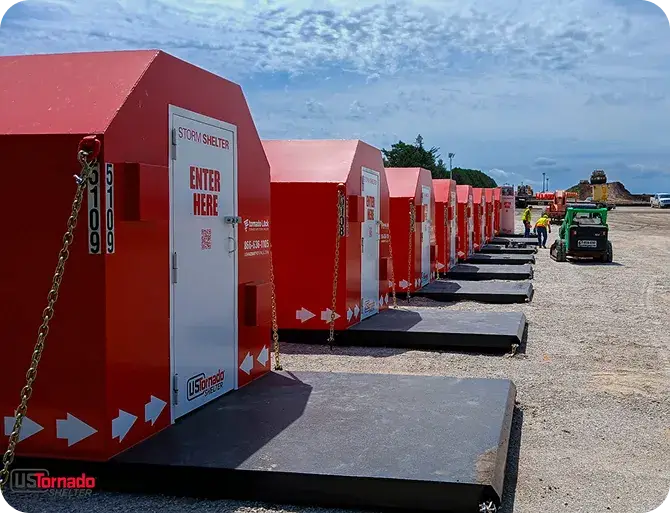
For large campuses including auto OEM plants, multi-building ISDs, hospital systems, ports, and refineries, US Tornado Shelter deploys multi-unit networks that meet FEMA travel-distance criteria across the entire footprint, then expand as the operation grows.

The US Tornado Shelter Planner App calculates your specific Tennessee facility’s capacity in minutes.
US Tornado Shelter is locally owned and operated, with manufacturing in Wilkesboro, North Carolina — a manageable delivery distance to every Tennessee market. Shelters reach Nashville, Memphis, Knoxville, Chattanooga, Clarksville, Murfreesboro, Franklin, Johnson City, Kingsport, Bristol, Jackson, Cookeville, Cleveland, and remote rural sites. Rental and immediate-inventory units accelerate timelines for urgent projects.
US Tornado Shelter supports Tennessee state, county, municipal, school district, federal, and prime-contractor procurement. Capability statement materials, FEMA P-361 / ICC-500 engineering documentation, capacity planning, and bid-ready specs are available on request.
Tennessee averages roughly 30 to 40 confirmed tornadoes per year, with a significant percentage occurring overnight due to the state’s location in Dixie Alley. Deploying certified Tornado Shelters in Tennessee offers essential protection against unpredictable nocturnal supercells.
Severe events include the March 2020 Middle Tennessee EF-4 outbreak (Nashville, Mt. Juliet, Cookeville) and the December 2023 Clarksville EF-3 storm.
While storms strike statewide, high-risk zones include Middle Tennessee (Nashville metro), West Tennessee corridors, and the Tennessee River Valley.
Yes. Under International Building Code (IBC Section 423) criteria adopted in designated 250 mph wind zones, new K-12 educational occupancies with 50+ capacity must incorporate FEMA P-361 / ICC 500 shelters.
Yes. We provide full transport, crane positioning, and site-anchoring services across all 95 Tennessee counties.
Yes. We offer mobile, surface-anchored above-ground storm shelter rentals designed for active construction projects, industrial plants, and seasonal jobsites.
Commercial and educational safe rooms must conform to FEMA P-361 guidelines and ICC 500 structural standards for 250 mph wind load and missile-impact resistance.
Yes. Our engineering team supplies complete submittal documentation, structural calculations, and stamped drawings to support municipal, educational, and state RFPs across Tennessee.
You can reach our sales and engineering teams directly by phone at 855-540-1566. Our manufacturing plants and corporate headquarters are located at 355 Industrial Park Dr, Boone, NC 28607 and 1804 River Street, Wilkesboro, NC 28697, providing full transport, crane positioning, and anchoring across Tennessee.
You can utilize our interactive Tornado Shelter Planner App to calculate occupant headcount requirements under FEMA criteria, evaluate shelter dimensions, and request technical submittals for your Tennessee project site.
Tennessee tornadoes hit hardest at night. Whether you’re a safety director at BlueOval City, GM Spring Hill, Nissan Smyrna, or Eastman, a facilities lead for a Tennessee school system, a GC building a distribution or healthcare campus, or a city manager rebuilding after a storm — US Tornado Shelter has a Tennessee-ready answer.
We use cookies and similar tools to run this site, improve performance and customer service, and measure our advertising. You can accept, reject, or manage these, and opt out of sharing for advertising at any time. Privacy PolicyEssential cookies stay on. Optional cookies power analytics and advertising; accept, reject, or manage them — and opt out of ad sharing anytime. Privacy Policy & Terms. With your consent, we use cookies and similar technologies to improve site performance and customer service and to measure our advertising. Only strictly necessary cookies run unless you accept. Your data may be processed in the United States by us and our service providers. You can withdraw or change your consent at any time under “Privacy settings”. Privacy Policy
Choose what we may use. You can change this any time from “Your Privacy Choices” at the bottom of the page. Partners may not use your information for their own independent marketing. Each purpose below is optional and relies on your consent (GDPR Art. 6(1)(a)). Nothing is switched on until you choose. You can withdraw consent at any time from “Privacy settings” at the bottom of the page; withdrawal doesn’t affect processing that happened before it. Partners may not use your information for their own marketing.
Your browser is sending a Global Privacy Control signal, so Marketing is off unless you turn it on here.
Keeps the site secure and working: page delivery, spam protection on forms, your quote cart, and remembering these choices.
Helps us see how the site is used so we can improve it and connect your inquiry to how you found us. Google Analytics, Contentsquare, Jetpack/WordPress.com Stats, VisibilityKit, UTM attribution (HandL) · processed in the US
Measures which ads bring customers to us and keeps our messaging relevant. Turning this off opts you out of sharing your information for cross-context behavioral advertising. Google Ads, Microsoft Advertising, LinkedIn, Vibe, HubSpot · processed in the US