
EF-0 Tornado Hits Near Hammond
A tornado shelter is part of the planning conversation again after the National Weather Service confirmed an EF-0 tornado west of Hammond, Louisiana, on Monday afternoon. The survey found peak winds near 85 mph. The path was about 0.77 miles. Damage was minor, but it included tree loss and the collapse of an exterior wall on a small professional building. No injuries or fatalities were reported.
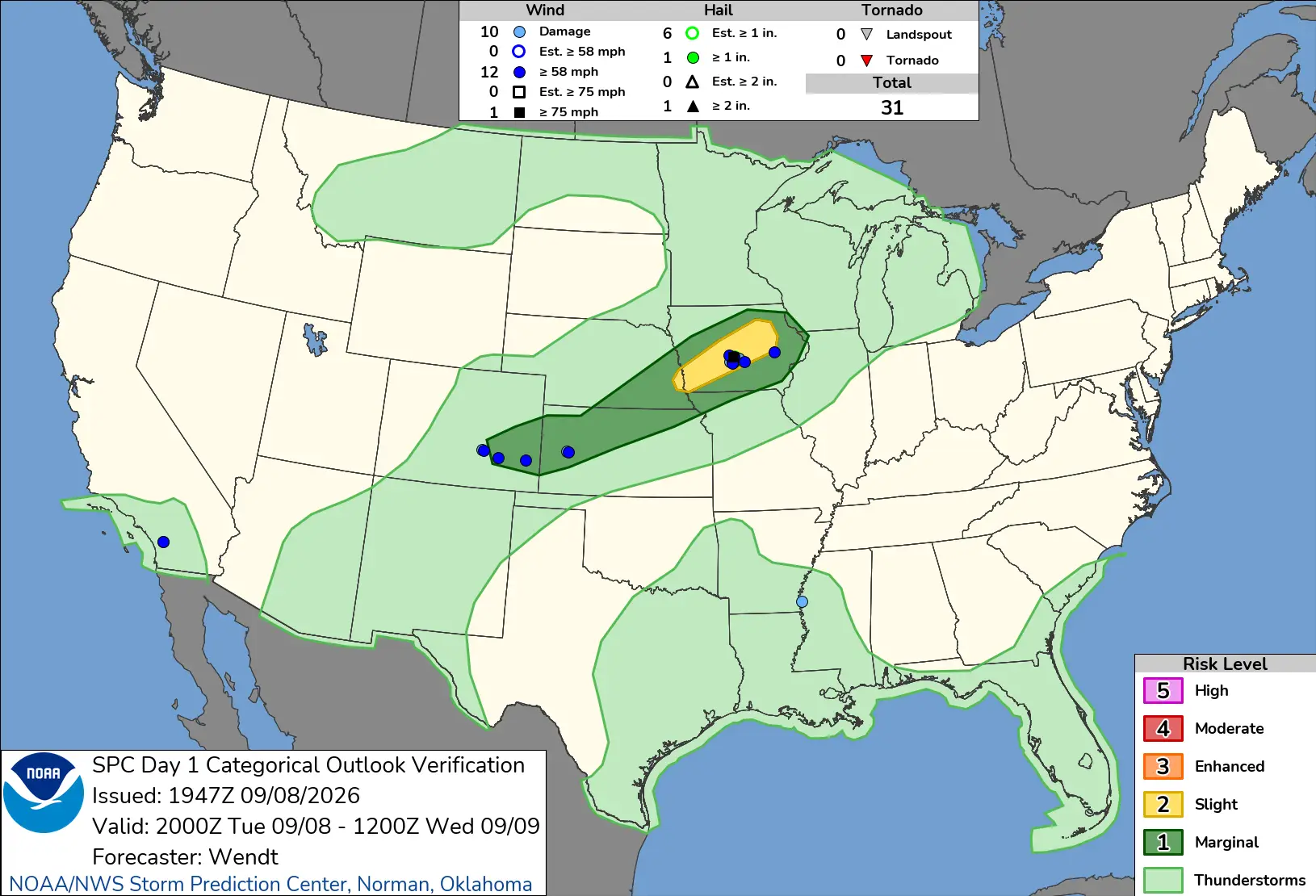
Source: NOAA Storm Prediction Center
Survey confirms tornado west of Hammond
The confirmation came after a National Weather Service storm survey in the Hammond area. The tornado touched down west of Hammond and tracked a short distance before lifting. That kind of brief, low-end tornado can still damage roofs, siding, trees, and light commercial structures. It can also expose weak points in buildings that appear secure during routine severe weather.
For facility managers in Tangipahoa Parish, the event is a reminder that even an EF-0 can disrupt operations. A small building wall failed. Trees were damaged. Those impacts can delay access, interrupt work, and force temporary closures. In Louisiana, tornadoes often form in fast-moving spring and summer storm lines. They can also develop with little lead time when storms move through humid air and strong wind shear.
The National Weather Service uses storm surveys to confirm tornadoes and rate them on the Enhanced Fujita scale. An EF-0 is the lowest rating, but it still reflects a real tornado with measurable damage. In this case, the survey documented estimated peak winds of 85 mph. That is enough to damage lighter structures and create hazards around parking lots, loading areas, and exterior work zones in Hammond and nearby parts of southeastern Louisiana.
Tornado shelter planning for Hammond facilities
Hammond sits in a part of Louisiana that sees repeated severe weather threats through the warm season. Thunderstorms can organize quickly across the Gulf South. When they do, the first warning may arrive with little time to move workers or visitors to safer ground. That is why a tornado shelter remains a key part of continuity planning for schools, offices, and industrial sites across Hammond, Ponchatoula, and the broader Tangipahoa Parish area.
Commercial buildings often have more people on site than they can move efficiently during a warning. Hallways, interior rooms, and break areas are not designed for the same level of protection as a rated shelter. For operations teams, the question is not whether a tornado will be strong. It is whether the building can protect people if a warning is issued during shift change, lunch, or a high-traffic production period. A commercial tornado shelter gives planners a fixed point for that response.
Recent storm surveys like the one near Hammond also help managers judge exposure by location. A short-track tornado can still strike a single parcel, a warehouse edge, or a small office building while nearby properties avoid damage. That pattern is common in Louisiana tornado events. It is one reason many organizations review their service areas and site-specific risk after each confirmed tornado.
What the EF-0 damage means for operations
The damage report near Hammond was limited, but it was not trivial. Minor tree damage can still block driveways, loading lanes, and emergency access. An exterior wall collapse can trigger inspections and temporary shutdowns. For industrial and manufacturing sites, even a small event can affect schedules, deliveries, and employee movement. The cost is often measured in lost time first, then repairs.
Louisiana weather history shows that tornadoes do not need to be large to create operational problems. Brief tornadoes can strike during ordinary work hours. They can also arrive during storms that already bring heavy rain and frequent lightning. That combination complicates evacuation and sheltering decisions. The National Weather Service and the Storm Prediction Center both track the setup that leads to these outbreaks, including unstable air, wind shear, and storm organization across the region.
For plant managers, the lesson from the Hammond tornado is straightforward. A site can remain functional after a low-end tornado and still suffer enough damage to interrupt production. Exterior walls, windows, and roof edges are common weak points. So are outdoor storage areas and employee parking zones. A tornado shelter does not replace building maintenance or warning systems. It gives staff a protected destination when the warning is real and the clock is short.
Why shelters matter after this storm
This event near Hammond was small, but it was confirmed. That matters for planning. A verified tornado means the threat was not theoretical. It reached the ground west of Hammond, crossed a measurable path, and damaged a building. For a facility manager, that is a direct test case for site readiness in southeastern Louisiana.
Organizations that operate in Hammond, Baton Rouge, and nearby industrial corridors should review where people would go during a warning and how long it would take to get there. The best shelter plan is one that works during a normal shift, not only during a drill. Facility managers can use our Storm Planner to evaluate shelter placement before the next severe weather outbreak. That review can help identify gaps in coverage, access, and capacity before another warning reaches the area.
For teams comparing options, our commercial tornado shelters page outlines available solutions for permanent protection. The right fit depends on occupancy, site layout, and how quickly people must move from production floors or yard areas. In a region where severe weather can develop fast, those details matter more than the headline wind speed.
Speak with a Specialist
Industrial and manufacturing sites in Hammond and across Louisiana can review current needs now, before the next round of severe weather. If your operation needs permanent protection, you can view available shelter inventory and compare options for your facility. If your project needs flexibility, you can explore rental options for temporary coverage during construction, outages, or seasonal risk periods. You can also use the Storm Planner to map placement, then contact our team to speak with a specialist about your site. For a closer look at installed solutions, review the photo gallery and see how shelters are deployed for real-world industrial use.