
EF1 Tornado Hits Near Newington
Officials confirmed an EF1 tornado in eastern Screven County near Newington, Georgia, and the damage pattern is a clear reminder that every facility in the area needs a tornado shelter plan before the next severe weather round arrives.
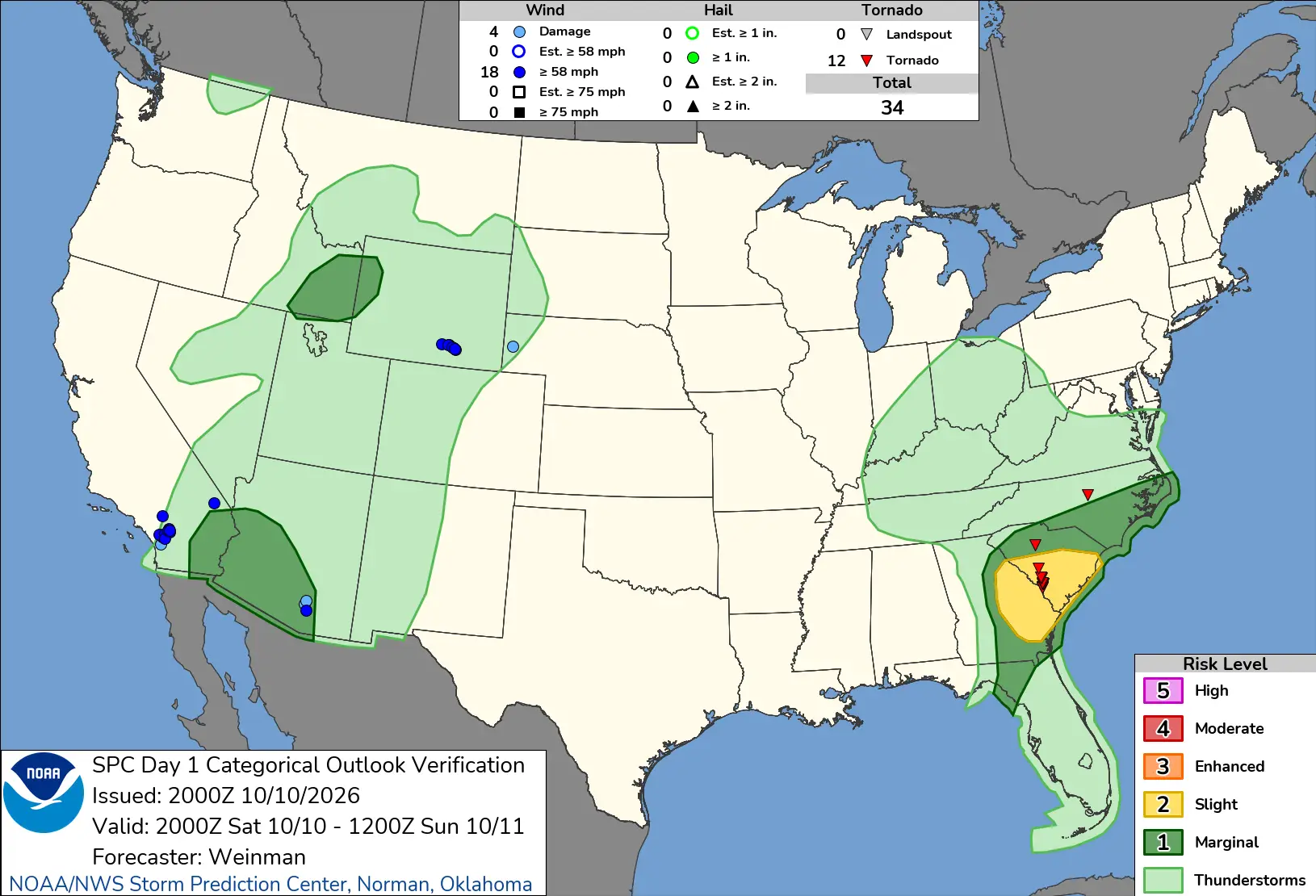
Source: NOAA Storm Prediction Center
Survey Team Confirms Damage Near Ogeechee Creek
A NOAA and National Weather Service storm-report archive said an NWS survey team confirmed the tornado on October 10. The tornado touched down south of Highway 21 near Ogeechee Creek. It caused significant tree damage, major damage to a mobile home from a fallen tree, and damage to several cars.
That damage profile fits a brief but disruptive tornado. EF1 winds can still bring down trees, block roads, and damage light structures. In eastern Screven County, that can slow response times and complicate access for utility crews, emergency managers, and plant operators. It can also create secondary hazards along rural routes near Newington and across nearby parts of Screven County.
For facility leaders, the key issue is not just wind speed. It is exposure. Trees, parked vehicles, and mobile structures often take the first hit. A tornado shelter gives staff a protected place to move when warnings are issued and debris begins to fly.
Tornado Shelter Planning for Newington Facilities
Newington sits in a part of southeast Georgia that sees tornado risk from both warm-season storms and cool-season systems. The region can see fast-moving thunderstorms that form along strong boundaries. It can also see tornadoes on the outer edge of larger severe weather outbreaks. Those events often arrive with little margin for error.
That matters for industrial sites, warehouses, and distribution yards near Newington and across eastern Screven County. Trees can fall across access roads. Cars can be damaged in open lots. Power interruptions can follow. A commercial tornado shelter helps reduce the chance that a warning turns into an evacuation problem.
Weather monitoring remains central. The National Weather Service issues warnings and conducts post-storm surveys. The Storm Prediction Center tracks the broader severe weather setup and helps define risk before storms form. Those products give operations teams time to stage staff and review shelter access. They also support decisions on staffing, shift changes, and outdoor work stoppages.
For this event near Newington, the lesson is simple. Tree cover can hide risk until the storm is already overhead. A tornado shelter should be part of the site’s severe weather plan, not an afterthought. Facility managers can use our Storm Planner to evaluate shelter placement before the next severe weather outbreak.
Why This EF1 Tornado Matters to Operations
Even a lower-end tornado can create a wider operational problem than the damage photos suggest. Fallen trees can trap trucks. Damaged cars can block employee parking areas. Debris can delay deliveries and shift starts. In rural and semi-rural parts of Screven County, those delays can spread quickly across a site.
Newington and nearby communities also face the challenge of dispersed facilities. That includes manufacturing yards, maintenance shops, and storage buildings that may not have quick access to hardened refuge space. A tornado shelter can limit downtime when warnings are issued during active shifts. It also gives supervisors a clear action point during fast-moving severe weather.
NOAA and NWS surveys are important because they confirm what happened on the ground. In this case, the confirmed EF1 tornado near Newington shows that the threat was not theoretical. It produced real damage south of Highway 21 near Ogeechee Creek. That is the kind of event that should trigger a review of shelter capacity, warning procedures, and employee accountability.
For site managers in eastern Screven County, the question is whether current protection matches current risk. If staff are still relying on interior rooms that were never designed for storm refuge, the gap is worth closing. A tornado shelter is a direct response to the kind of tree and vehicle damage reported in this event.
Check Rental Availability
Industrial and manufacturing operators in Newington, Screven County, and across Georgia can review options now rather than after the next warning. You can view available shelter inventory, explore rental options, and use the Storm Planner to compare placement needs for your site. If you want to see build quality and layout options first, review the photo gallery. For timing, sizing, and deployment questions, contact our team to discuss the best fit for your facility.
Our commercial tornado shelters are built for businesses that need a practical response to severe weather risk. If your operation is in or near Newington, this EF1 tornado is a prompt to reassess shelter coverage before the next warning reaches Screven County.