
Wisconsin Tornado Cuts Power, Damages Homes
A tornado in northeastern Wisconsin forced workers into a tornado shelter on Monday and knocked out power to more than 30,000 people, a sharp reminder of how fast severe weather can disrupt business operations across the Fox Valley and surrounding communities.
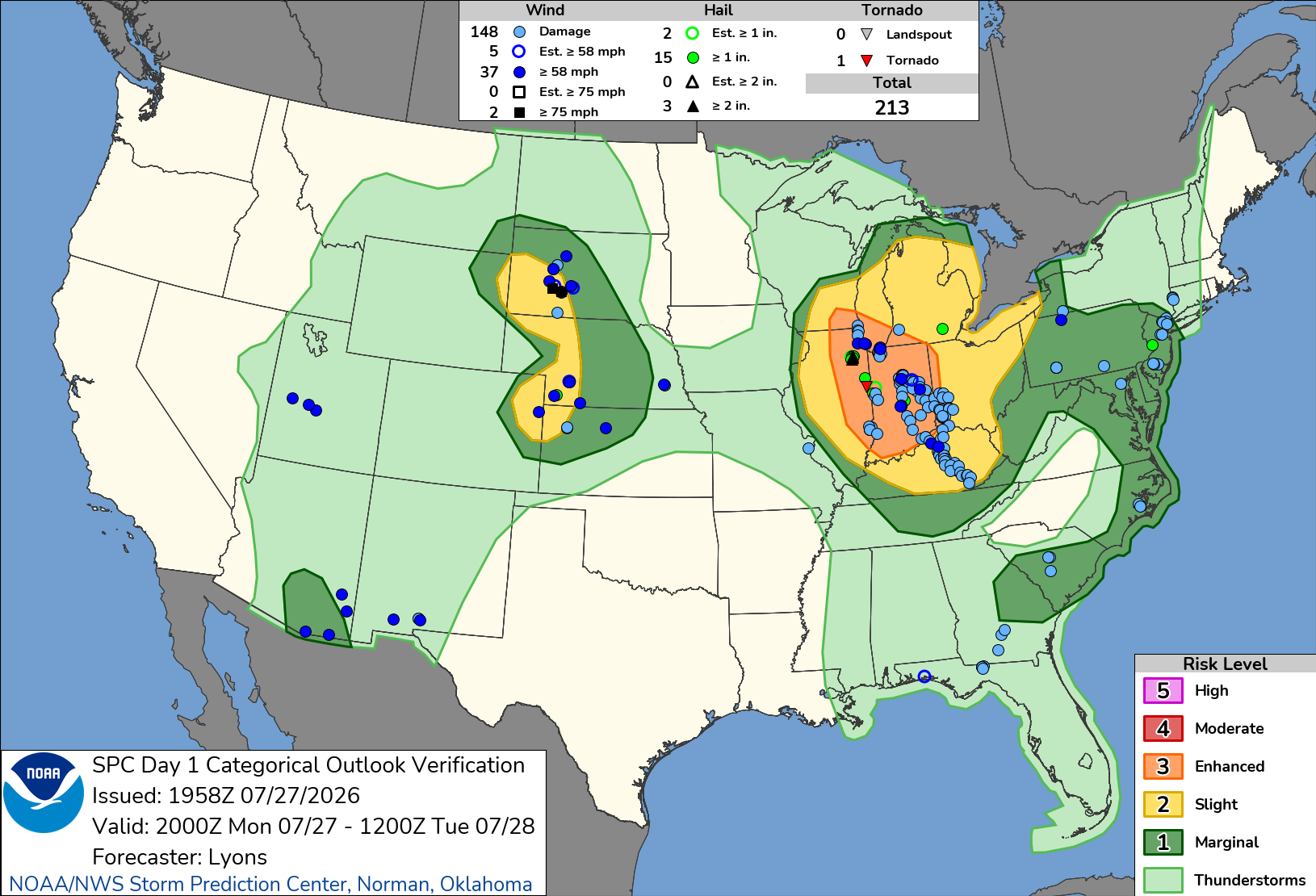
Source: NOAA Storm Prediction Center
Damage spread across northeastern Wisconsin
The storm hit as crews and office staff were already inside buildings and moving to lower levels for protection. The event affected northeastern Wisconsin, where tornadoes can form quickly during warm-season storm outbreaks. In this case, the immediate impact was extensive damage and a wide power outage that reached tens of thousands of homes.
For facility managers in Green Bay, Appleton, Oshkosh, and nearby counties, the first concern after a tornado is often not just structural damage. It is whether operations can continue with unstable power, blocked access roads, and damaged utility lines. A single tornado can shut down production, delay shipments, and interrupt critical systems even when the building itself remains standing.
Wisconsin sits in a region that sees tornado risk rise sharply during late spring and summer. Storms here often develop along fast-moving boundaries or within larger thunderstorm complexes. When the atmosphere supports rotation, warnings can come with little lead time. That is one reason many sites in the state review their response plans after each severe weather event.
Power loss adds to operational risk
The outage affecting more than 30,000 people shows how tornado damage reaches beyond the path of the storm. Power interruptions can stop refrigeration, automation, access control, and communications. They can also slow damage assessment and recovery work. For industrial sites, that can mean lost product, idle labor, and missed delivery windows.
Northeastern Wisconsin has a dense mix of manufacturing, logistics, and service operations. That makes continuity planning a business issue, not just a safety issue. A tornado near Green Bay or Appleton can affect suppliers and customers well outside the immediate damage zone. Utility restoration may take hours or longer, depending on line damage and debris.
Officials typically rely on warnings from the National Weather Service and outlooks from the Storm Prediction Center to track the risk before storms intensify. Those products help managers decide when to pause work, move staff, and secure equipment. They also help identify whether a facility needs a better protected refuge area or a more formal tornado shelter plan.
Tornado shelter planning for Wisconsin facilities
This event is a direct reminder that basement space is not always enough. Workers in office basements had to shelter quickly, which likely reduced exposure. But many Wisconsin facilities do not have basements, and many newer buildings use large open-floor designs with long travel distances to safer areas. A commercial tornado shelter can reduce uncertainty when severe weather arrives during a shift change, maintenance window, or peak production period.
For plants, warehouses, and municipal buildings in northeastern Wisconsin, shelter planning should account for occupancy, shift patterns, and how long it takes to move people from the farthest point on site. Facility managers can use our Storm Planner to evaluate shelter placement before the next severe weather outbreak. That review is especially useful after a tornado has already shown how quickly conditions can change in Wisconsin.
Our commercial tornado shelters page outlines options for sites that need protected space for staff during warnings. The right solution depends on occupancy and layout. It also depends on how much downtime a business can absorb after a storm.
Why this storm matters for the region
Northeastern Wisconsin is not immune to tornadoes, even if many decision-makers focus more often on winter weather or flooding. Tornadoes in this part of the state can still produce significant damage, especially when they strike developed areas with overhead utilities, light industrial buildings, and tree-lined streets. The Monday event fits that pattern. It caused extensive damage and widespread outages, which are common consequences when a tornado crosses populated corridors.
For operations directors, the lesson is tied to response time. A warning may arrive with only minutes to act. That leaves little room to move a full shift across a large site unless the shelter plan is already built into daily procedures. It also leaves little room to improvise if a storm arrives during a busy production cycle or while contractors are on site.
Businesses in Green Bay, Appleton, Oshkosh, and nearby communities should also review how they communicate during outages. Backup radios, battery-powered alerts, and clear assembly procedures matter when power is down. So does knowing which parts of a facility remain usable after the storm passes.
Regional weather coverage from NOAA and local forecast offices often shows that tornado outbreaks can cluster with strong wind and hail threats. That makes the planning window narrow. A site that can move people into a protected area fast is better positioned to keep the rest of the operation stable.
Get Pricing for industrial sites
Industrial and manufacturing facilities in Wisconsin should treat this tornado as a current planning signal, not a distant headline. If your site depends on uninterrupted shifts, controlled access, or sensitive equipment, review your protection strategy now. You can photo gallery to see shelter examples, explore rental options for shorter-term needs, and contact our team for pricing and site-specific guidance. Use the Storm Planner to map your layout, then compare options and view available shelter inventory before the next round of severe weather reaches northeastern Wisconsin.