
Confirmed Tornado Hits Northeast Fort Stockton
A tornado shelter is a critical planning issue after a confirmed tornado was reported about 7 miles northeast of Fort Stockton, Texas, on October 14. The Tornado Warning for north-central Pecos County cited emergency management confirmation, quarter-size hail, and preliminary reports of damage.
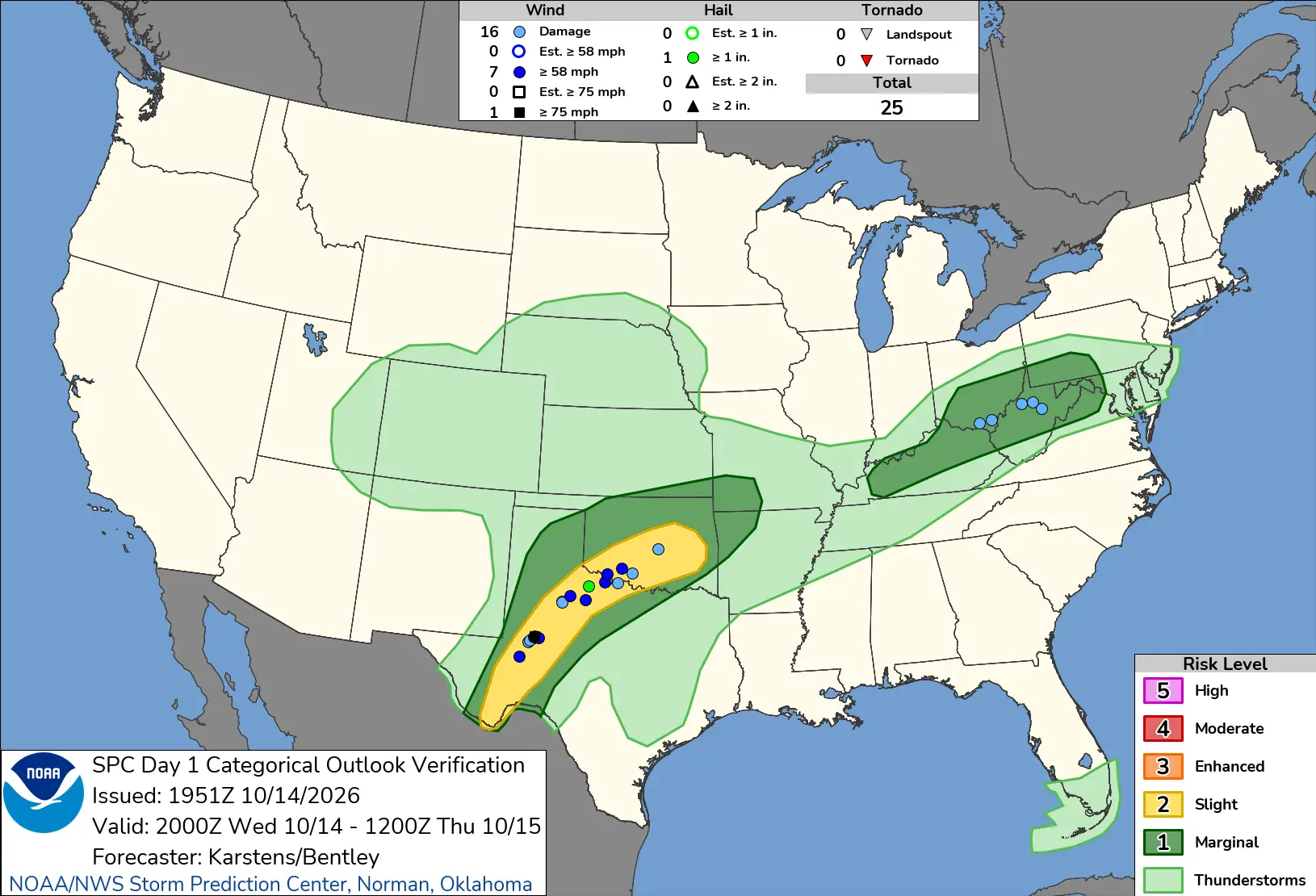
Source: NOAA Storm Prediction Center
Warning Covers North-Central Pecos County
The warning placed Fort Stockton and nearby parts of Pecos County under immediate concern as the storm moved through west Texas. The report of a confirmed tornado means officials had reason to believe rotation had reached the ground. That raises the urgency for any facility still operating in the warning area.
For operations leaders in Fort Stockton, the immediate issue is not just the tornado itself. It is the combination of hail, wind, and possible debris impacts that can interrupt work, damage roofs, and force an evacuation. In west Texas, storms can organize quickly along drylines and outflow boundaries. That pattern often leaves little lead time for outdoor crews, warehouse staff, and shift workers.
The National Weather Service uses tornado warnings to trigger protective action, not review. The warning language in this case pointed to a confirmed tornado and preliminary damage reports. That is the kind of alert that demands a fast internal response. The National Weather Service and the Storm Prediction Center both stress that warning response depends on speed, not certainty.
Tornado Shelter Planning for West Texas Facilities
Pecos County sits in a part of Texas that sees severe weather from multiple storm modes. Spring is the peak season, but strong late-season outbreaks are not unusual. October storms can still produce rotating cells, large hail, and brief tornadoes. For a facility manager in Fort Stockton, that means shelter planning cannot be seasonal only. It has to be part of daily operations.
This event also shows why a tornado shelter matters for sites with limited nearby refuge. Industrial yards, truck terminals, schools, and municipal buildings often have wide roof spans and long interior travel distances. Those features can slow evacuation. A commercial tornado shelter gives staff a protected option when warning time is short and conditions worsen fast.
Quarter-size hail is another operational clue. Hail of that size can damage vehicles, skylights, HVAC units, and exposed equipment. If the storm also produced a tornado northeast of Fort Stockton, the risk profile expands from property damage to life safety. That is where a tornado shelter becomes part of continuity planning, not just emergency compliance.
For teams reviewing site readiness, our commercial tornado shelters page outlines options for facilities that need permanent protection. The right design depends on occupancy, footprint, and how quickly people can reach cover during a warning.
What This Means for Fort Stockton Operations
Confirmed tornado reports near Fort Stockton should prompt a fresh look at access routes, assembly points, and interior refuge areas. If a warning is issued during shift change, staff movement can become chaotic. If the storm hits during loading or maintenance work, employees may be spread across multiple buildings or yards. That is a common failure point in severe weather response.
In Pecos County, distance matters. Some sites are far from municipal shelters or hardened public buildings. That makes on-site protection more important for industrial operators and large campuses. A tornado shelter can reduce the need to move people across exposed ground during active severe weather.
Damage reports tied to this warning were preliminary, but they still matter. Even limited structural damage can close access roads, interrupt power, or trigger inspections. In west Texas, where operations often depend on trucking and outdoor storage, a short shutdown can ripple through the rest of the day. A facility that can account for people quickly and move them to cover has a better chance of resuming work sooner.
State and federal weather agencies continue to emphasize warning response because tornadoes can form and intensify within minutes. For background on warning procedures and storm risk, facility teams can also review NOAA resources and the National Weather Service guidance before the next round of severe weather reaches west Texas.
Preparedness After the Fort Stockton Tornado
This confirmed tornado northeast of Fort Stockton is a reminder that shelter planning should be tied to the actual hazards a site faces. In Pecos County, that means tornadoes, large hail, and fast-moving warning windows. It also means planning for employees who may be in parking lots, yards, or remote corners of a property when the alert comes in.
Facility managers can use our Storm Planner to evaluate shelter placement before the next severe weather outbreak. The tool helps map where people work and how they would reach cover during a warning. That is especially useful for sites in Fort Stockton and across west Texas, where distances on a property can be a real barrier to fast sheltering.
For operations teams, the key question is whether current refuge space matches the risk. If it does not, the gap should be addressed before another warning is issued. A tornado shelter is most effective when people can reach it quickly and without confusion. That is especially true in a county where storms can move from hail to tornado threat in a short time.
Check Rental Availability for Industrial Sites
Industrial and manufacturing sites in Fort Stockton, Pecos County, and across Texas can review current options to view available shelter inventory and explore rental options for near-term protection needs. If your plant or yard needs a faster path to coverage, use the Storm Planner to assess placement, then contact our team to discuss timing and fit. You can also review the photo gallery to see shelter configurations used at active facilities. For teams comparing layouts and deployment needs, the industries we serve page can help frame the right approach for your operation.